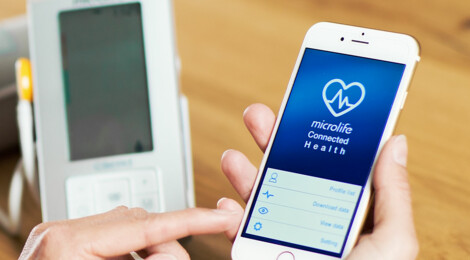

Frequently asked Questions about our Blood Pressure Monitoring during Pregnancy
- What is pre-eclampsia?
- What are the symptoms of pre-eclampsia?
- When does pre-eclampsia occur in a pregnancy?
- Who is most at risk?
- Does high blood pressure mean I have pre-eclampsia?
- Why is blood pressure monitoring during pregnancy so important?
- Which values are normal during pregnancy and when are they too high?
- Which values are normal before and after pregnancy?
- What are the risks of pre-eclampsia to the baby and me?
- What is the treatment for pre-eclampsia?
- Can pre-eclampsia be prevented?
- Are there any long-term effects from pre-eclampsia?
- Helpful links on PreEclampsia.
What is pre-eclampsia?
Pre-eclampsia is a problem that occurs in some women during pregnancy. It can happen during the second half of pregnancy. Your doctor will look for the following signs of pre-eclampsia: high blood pressure, swelling in the lower extremities that don't go away and protein in your urine.
What are the symptoms of pre-eclampsia?
A person with a "mild" pre-eclampsia may feel perfectly well. Therefore, it is important to attend all prenatal checkups to spot this condition early. The symptoms of severe pre-eclampsia, which can develop during the last weeks of pregnancy, are high blood pressure, headaches, blurred vision, intolerance of bright light, nausea and vomiting and excessive swelling of the feet and hands.
When does pre-eclampsia occur in a pregnancy?
Pre-eclampsia can appear at any time during the pregnancy, delivery and up to six weeks post-partum, though it most frequently occurs in the final trimester and resolves within 48 hours of delivery. Pre-eclampsia can develop gradually, or come on quite suddenly, though the signs and symptoms may have been present for months undetected or unnoticed.
Who is most at risk?
Pre-eclampsia is more common in a woman's first pregnancy and in women whose mothers or sisters had pre-eclampsia. The risk of pre-eclampsia is higher in women carrying multiple babies, in teenage mothers and in women older than age 40. Other women at risk include those who had high blood pressure or kidney disease before they became pregnant and women with a body mass index (BMI) over 35.
The cause of pre-eclampsia isn't known.
Does high blood pressure mean I have pre-eclampsia?
Not necessarily. If your doctor sees that your blood pressure is high, he or she will watch you closely for changes that could mean you have pre-eclampsia. In addition to high blood pressure, women who have pre-eclampsia also have excessive swelling. They may also have protein in their urine. Many women with high blood pressure during pregnancy don't have protein in their urine or extreme swelling, and don't get pre-eclampsia.
If you have high blood pressure daily blood pressure monitoring is very important.
Why is blood pressure monitoring during pregnancy so important?
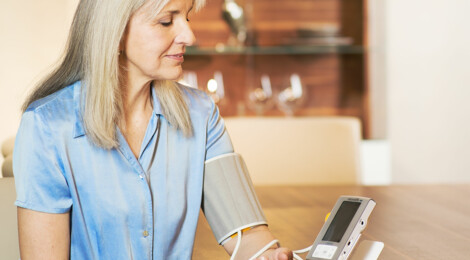
Pre-eclampsia can be recognised by a clear increase in blood pressure. You should therefore measure your blood pressure at least twice a day - in the morning and evening. Please perform the measurements when you fell relaxed, under quiet conditions and in a sitting position.
Which values are normal during pregnancy and when are they too high?
Please refer to the following table. These data should be taken as a reference during pregnancy (units in mmHg):
| Range | Systolic | Diastolic | Recommendation |
| Normal Range | less than 140 | less than 90 | Self-check |
| Hypertension | higher than 140 | higher than 90 | Seek medical advice |
| Severe Hypertension | higher than 180 | higher than 100 | Urgently seek medical advice! |
Reference:Prof. A. H. Shennan, St. Thomas Hospital, London
Which values are normal before and after pregnancy?
Table for classifying blood-pressure values (units mmHg) according to World Health Organization:
| Range | Systolic | Diastolic | Recommendation |
| blood pressure to low | < 100 | < 60 | Consult your doctor |
| blood pressure optimum | 100 - 120 | 60 - 80 | Self-check |
| blood pressure normal | 120 - 130 | 80 - 85 | Self-check |
| blood pressure slightly high | 130 - 140 | 85 - 90 | Consult your doctor |
| blood pressure to high | 140 - 160 | 90 - 100 | Seek medical advice |
| blood pressure far too high | 160 - 180 | 100 - 110 | Seek medical advice |
| blood pressure dangerously high | > 180 | > 110 | Urgently seek medical advice! |
What are the risks of pre-eclampsia to the baby and me?
Pre-eclampsia can prevent the placenta from getting enough blood. If the placenta doesn't get enough blood, the baby gets less air and food. This can cause low birth weight and other problems for the baby.
Most women with pre-eclampsia still deliver healthy babies. A few develop a condition called eclampsia, which is very serious for the mother and baby, or other serious problems. Fortunately, pre-eclampsia is usually detected early in women who get regular prenatal care, and most problems can be prevented.
What is the treatment for pre-eclampsia?
The only cure is delivery of the baby. When pre-eclampsia develops, the mother and her baby are monitored carefully. That means blood pressure should be monitored twice daily, frequent monitoring of urinary protein excretion, weight change and symptoms are mandatory. There are medications and treatments that may prolong the pregnancy, which can increase the baby's chances of health and survival.
Can pre-eclampsia be prevented?
Pre Eclampsia does not seem to be a disease which can be prevented by regulating lifestyle factors such as what a woman eats, whether or not she smokes or drinks, how hard she works, how much exercise or rest she undertakes, how anxious or relaxed she is, and so on. Moreover, there is also some evidence to suggest that calcium supplements may decrease the risk of Pre-eclampsia, especially in mothers living in areas deficient in dietary calcium. Calcium may work under these circumstances by helping blood vessels to relax, thereby preventing hypertension.
Are there any long-term effects from pre-eclampsia?
For most mothers, delivery will reverse all the effects of Pre Eclampsia. Some women who have suffered Pre-eclampsia during pregnancy may develop high blood pressure later in life. This is thought to be caused by a genetic tendency to high blood pressure rather than to have been caused by the Pre-eclampsia itself.
For babies, only if the babies have suffered severe nutrient starvation or oxygen deprivation in the womb or have been troubled by complications of pre-maturity. It is currently thought that babies born of mothers who have suffered Pre-eclampsia do not in themselves develop long-term health problems.
Helpful links on Pre-Eclampsia
| Organisation | Link | |
| Preeclampisia foundation | www.preeclampsia.org | |
| American Academy of Family Phisicians | http://familydoctor.org | |
| DrKoop.com | www.drkoop.com/encyclopedia/93/16.html | |
| Emedicine (for professionals) | www.emedicine.com/emerg/topic480.htm | |
| Preeclampsia Society UK | www.dawnjames.clara.net | |
| Action on Preeclampsia (UK based charity) | www.apec.org.uk/home.htm | |
| Australian Action on Preeclampsia | www.aapec.com/index.php | |
| Pre-eclampsia experiences and discussion / support group | www.pre-eclampsia.co.uk | |
| International Society for the study of Hypertension in Pregnancy | http://www.ncl.ac.uk/isshp/index.htm | |
| Mayo Clinic | www.mayoclinic.com/invoke.cfm?id=PR00052 |


BPA Software 3.2.5