
If You Have High Blood Pressure, Monitoring it At Home Could Save Your Life

You have high blood pressure. You've changed your diet to lower it and you take medications each day to help control it. But, are you measuring your blood pressure regularly at home - If not, you should be. New, easy-to-use technology makes it easier than ever to monitor blood pressure yourself using blood pressure monitors that are as accurate as the one your doctor uses.

Home monitoring of blood pressure may help prevent life threatening complications by alerting you and your doctor to any unusual spikes, patterns and trends. By monitoring your blood pressure at home at least twice a week, you can be aware of any important changes.

The American Heart Association's blood pressure guidelines recommend home monitoring for patients with hypertension or who are at risk to develop it. And, according to a recent study that appeared in the Journal of the American Medical Association (JAMA), home blood pressure measurement is even more useful than an office measurement. The study authors said, "Home BP (blood pressure) measurement has better prognostic accuracy than office BP measurement. BP should systematically be measured at home in patients receiving treatment for hypertension."

Now that you know you should monitor your blood pressure at home, you need to know what your home blood pressure monitor will measure. Blood pressure is measured by millimeters of mercury, mm Hg, and two numbers are used in measuring it: systolic and diastolic. Systolic is the top number in a measurement and diastolic is the bottom measurement. For example, in the measurement 120/80, 120 is systolic and 80 is diastolic measurement.

Systolic pressure (the first and highest number) is the pressure the heart places on the walls of the blood vessels during each heartbeat. Diastolic pressure (the second and lowest number) is the pressure the blood places on the walls of the blood vessels between heartbeats. According to the Centers for Disease Control, optimal blood pressure is a systolic blood pressure less than 120 and a diastolic blood pressure less than 80.

Both of these measurements are important. A high systolic pressure indicates a strain on the blood vessels while the heart is pumping blood into the bloodstream. A high diastolic pressure means that the blood vessels are not relaxing enough between heartbeats. High blood pressure for adults is defined as a systolic pressure of 140 mmHg or higher, or a diastolic pressure of 90 mmHg or higher.

In May 2003, the National Heart, Lung and Blood Institute released new clinical practice guidelines for the prevention, detection, and treatment of high blood pressure and included a new "prehypertension" level which effects about 22 percent of American adults or about 45 million people. If your blood pressure is between 120-139 systolic and 80-89 diastolic, then you are prehypertensive and should also be monitoring your blood pressure at home.

Choosing a blood pressure monitor that is simple to use, accurate and reliable is easy, if you what to look for. The choices of monitors can vary from upper arm or wrist-type monitors, monitors that make measurements automatically or that require manual inflation and even new technology that allows for three consecutive blood pressure measurements with the push of a button, giving you the most accurate reading.

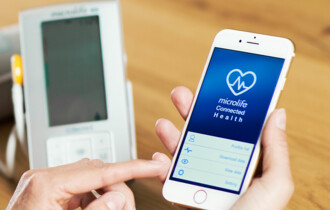
One of the newest technologies allows you to monitor for unusual or irregular heart beats. There are also blood pressure monitors that allow you to record each blood pressure measurement and easily keep track of them for their next visit to their doctor. In addition, some monitors allow you to fax or email your blood pressure measurements to their doctor using user-friendly technology.

There are three things patients should look for when choosing a monitor:


  1. Choose a design that will be easy for performing blood pressure measurements on your own arm.
  2. Choose a blood pressure monitor that has been clinically validated according to British Hypertension Society (BHS) criteria. Look for the BHS logo on the blood pressure monitor packaging. You may also check the BHS website for validated devices at www.hyp.ac.uk/bhs/.
  3. Choose a monitor that will store your blood pressure measurements so that you can easily share them with your doctor.


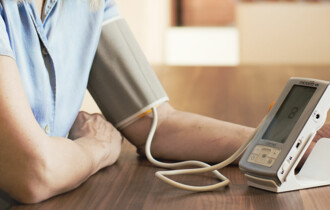
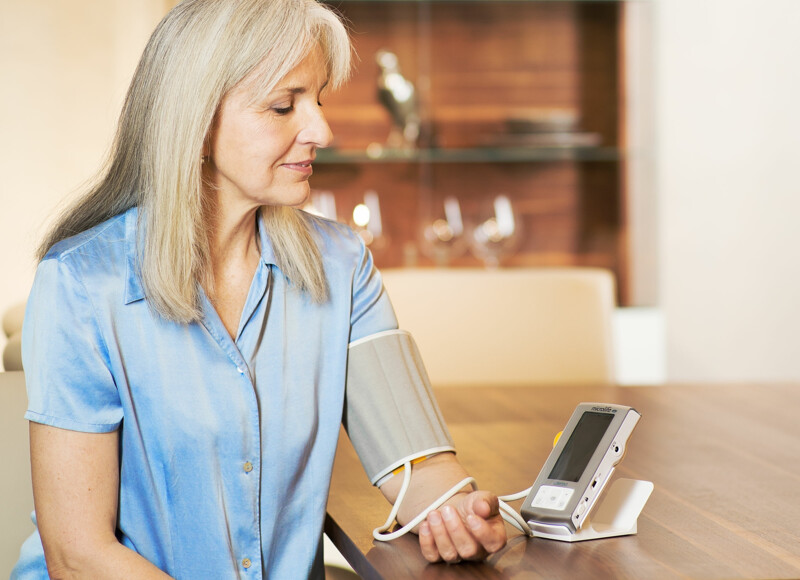
When making your blood pressure measurement it is important to follow the manufacturer's instructions on the use of the device. In addition, you should follow these simple steps to insure the most accurate blood pressure measurement:


  1. Have a paper and pen ready to record the blood pressure measurement; some blood pressure monitors will record and save the measurement automatically.
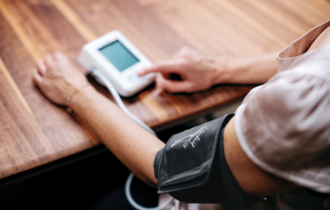
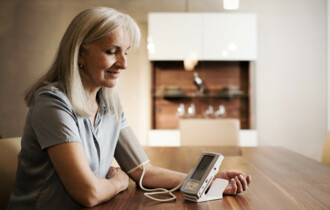
  2. Sit in a quiet, calm environment with your bared arm resting on a standard table or other support so the midpoint of the upper arm is at heart level.
  3. Wrap the blood pressure cuff around the upper arm or wrist (depending on the unit type) and follow the manufacturer's instructions to insure an appropriate fit and use.
  4. Make the blood pressure measurement.
  5. Record the blood pressure measurement reading and the time and date of the measurement.


All Microlife blood pressure monitors have been clinically validated according to British Hypertension Society (BHS) criteria. The BHS is the world's leading authority on blood pressure monitoring devices.

James R. Mault, M.D
Dr. Mault is a board-certified cardiothoracic surgeon. He is the author of more than 100 articles, chapters and books in the published medical literature and is named inventor of more than 100 issued and pending patents for a variety of medical devices and personal health monitoring systems. Dr. Mault currently maintains a faculty position in the Division of Cardiothoracic Surgery at the University of Colorado Health Sciences Center. Dr. Mault holds a BS in Biology and an MD from the University of Michigan. He serves as Chief Medical Officer for Microlife USA.

Font-size:
| |