
English
- EUROPE - English
- CZECHIA - Čeština
- DANMARK - Dansk
- DEUTSCHLAND - Deutsch
- ESPAÑA - Español
- FRANCE - Français
- HRVATSKA - Hrvatski
- ITALIA - Italiano
- LATVIJA - Latviešu
- LIETUVA - Lietuvių
- MAGYARORSZÁG - Magyar
- NEDERLAND - Nederlands
- ÖSTERREICH - Deutsch
- POLSKA - Polski
- PORTUGAL - Português
- SCHWEIZ - Deutsch
- SLOVENSKO - Slovenčina
- SLOVENIJA - Slovenščina
- SUOMI - Suomi
- SCHWEIZ - Français
- UK - English
- ΕΛΛΆΔΑ - Ελληνικά
- БЪЛГАРИЯ - Български
- СРБИЈА - Српски
- УКРАЇНА - Українська
- TÜRKIYE - Türkçe
- РОССИЯ - Русский
- БЕЛАРУСЬ - Русский
- О’ZBEKISTON - Русский
- О’ZBEKISTON - O’zbekcha
- ҚАЗАҚСТАН - Қазақ
- ҚАЗАҚСТАН - Русский


WatchBP technologies
WatchBP AFIB

WatchBP monitors with Atrial Fibrillation (AF) detection system.
AF is the most common sustained cardiac arrhythmia occurring in 5% of the population older than 65 years of age and in 14% among those older than 85 years. AF leads to a 5-fold higher risk of stroke and is responsible for 20% of all strokes. Many people have no symptoms from AF and therefore remain undiagnosed, whereas early treatment can reduce the risk of stroke by 68%.
WatchBP AFIB monitors allow AF screening during blood pressure measurement. The AF detection system has proven its accuracy, and leads to detection of more new patients with AF when used in general clinical practice.
Central blood pressure measurement

Non-invasive, reliable method based on brachial pulse volume plethysmography (PVP) waveforms.
Central blood pressure is the pressure in the aorta that may better correlate with cardiovascular risk than upper arm blood pressure measurement because the aorta is more close to the heart and brains.
The WatchBP Office Central can accurately assess central blood pressure and has been validated against intra-arterial blood pressure measurement.
WatchBP ABI

For an easy, fast and accurate assessment of the ankle brachial index (ABI).
Peripheral Arterial Disease (PAD) is an important cardiovascular risk that often remains undetected. Patients with PAD have a threefold higher risk of myocardial infarction, stroke and death. A recommended test for diagnosing PAD is performing ankle-arm measurements to assess the ankle brachial index (ABI). The WatchBP Office ABI has proven to be a fast, easy and reliable alternative for PAD screening with a Doppler device.
Night-time measurement

Accurate day and night blood pressure measurements.
• For measuring blood pressure during sleep.
• Helps to collect accurate day and night blood pressure measurements for a good overview of the daily blood pressure pattern.
Double arm measurement

The most reliable tool for determining inter-arm blood pressure differences (IAD).
Inter-Arm Difference (IAD) in blood pressure is an important cardiovascular risk predictor, but also for general hypertension management it is important to know if a patient has a relevant blood pressure difference between both arms.
Auscultatory mode

For manual measurement with a stethoscope.
For use in e.g. elderly, obese and those with arrhythmia.
SPRINT algorithm

Performing automated office blood pressure measurements (AOBPM).
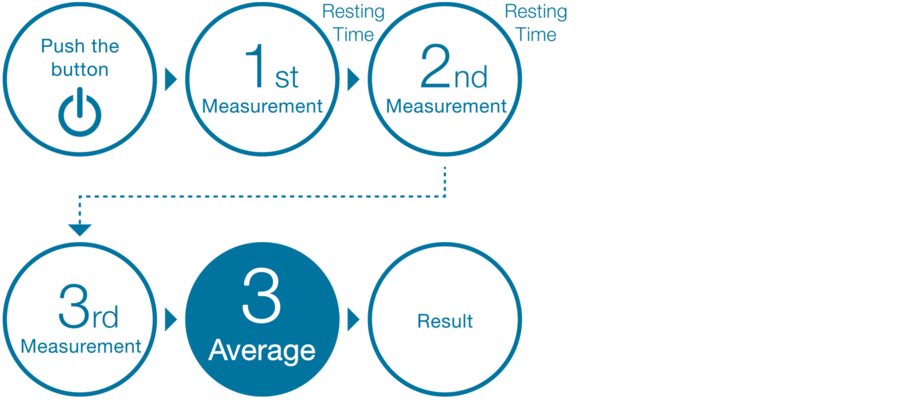
Towards the end of 2015 the results of the Sprint-trial were published [1] which had a great impact in cardiovascular disease management. In the Sprint-trial, which is being called the “the biggest blood pressure study of modern times” the researchers used a special way of measuring blood pressure. They used a method called Automated Office Blood Pressure Measurement (AOBPM). For this, the patients were left alone in a room with an automated blood pressure monitor. Once the blood pressure monitor was activated, it started to countdown from 5 minutes to zero after which 3 blood pressure measurements were taken automatically, with a 1-minute interval between each reading. This is what we call the “Sprint algorithm”. After the publication of the trial, we have received many requests for this algorithm from doctors all over the world. Therefore, we have decided to implement this in all WatchBP Office AFIB and WatchBP Office ABI devices.
Flexible BPM schedule

To help physicians all over the world adhering to measurement recommendations of different hypertension guidelines, Microlife has developed a professional blood pressure monitor with a flexible BP measurement schedule. With this unique option, the professional is free to select the preferred number of measurements, the interval time between measurement, the count-down period and even the way the average blood pressure value is calculated.

Therefore, blood pressure must be measured in both arms at the first clinical visit.
WatchBP Average

Three consecutive measurements in a row.
Guidelines recommend taking at least two blood pressure readings each time and average the measurements.
Advantages of taking 3 consecutive measurements:
• More accurate blood pressure measurement.
• Three sequential measurements diminishes the influence of a single deviating (high) reading.
Customisable measurement functions

The device can be upgraded with additional, helpful features like Atrial Fibrillation (AF) detection or central BP measurement function.
PC connection

Transmit measurement data to PC via USB connection.
The software for all WatchBP devices is user-friendly and allows easy data transfer and analysis. WatchBP software is free of charge to download direct from our website onto your computer.
Pill-button

For recording medication intake.
The pill-button can be used to record medication intake or to record an “event” that could influence blood pressure level.
ESH / AHA / BIHS guidelines embedded

The 7-days-measurement program.
Helps patients to perform 7-day self-measurement according to international well-known blood pressure measurement guidelines (ESH / AHA / BIHS).
For use in Pregnancy and Pre-eclampsia

Microlife's WatchBP Home is accurate for use in pregnancy and pre-eclampsia.
Pre-eclampsia is defined as new hypertension and substantial proteinuria after 20 weeks gestation. Due to the unpredictable nature of pre-eclampsia, blood pressure must be constantly checked.
Most oscillometric blood pressure monitors underestimate blood pressure in pre-eclampsia and therefore must be specifically validated for this special patient group. The WatchBP Home allows pregnant women to measure their blood pressure at home which could reduce the number of hospital visits and may help to make motherhood safer.
For use in Diabetes

Accurate measurement for patients with Diabetes.
Microlife blood pressure monitors are validated for blood pressure measurement in patients with diabetes. Patients with Diabetes Mellitus type 1 and 2 may have stiff arteries that can affect the blood pressure measurement. A recent validation study in diabetes patients type 1 and 2 showed that the Microlife monitor is accurate when used in this patient group.
For use in End-Stage Renal Disease (ESRD)

Validated blood pressure monitors for patients with end-stage renal disease.
Patients with renal disease have a very high incidence of hypertension, paired with stiff (calcified) arteries. As automated measurements are often inaccurate in patients with stiff arteries, a special validation is required.
For use in children

Accurate measurement for children 3–18 years.
Currently, blood pressure measurement is an important part of routine paediatric physical examination. However, as children have a high respiration rate and have difficulties in sitting still, one needs a blood pressure monitor with a high quality algorithm that can filter out these artefacts. In addition, a wide cuff range is needed that covers very small to large arm circumferences.
The Microlife WatchBP Office and O3 blood pressure monitors have proven to cover all these aspects and therefore can be recommended for children and adolescents aged 3 to 18 years old.

Accurate measurement for children 12–18 years.
All automatic upper arm blood pressure monitors of Microlife and WatchBP Home series can be recommended for children and adolescents aged 12 to 18 years old.
Brachial-ankle pulse wave velocity (baPWV) assessment
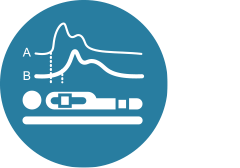
User-friendly with high reproducible cuff-based baPWV measurement method to evaluate arterial stiffness. The result is strongly associated with reference carotid-femoral pulse wave velocity (cfPWV), risk factors for arterial stiffness and the presence of arterial damage.
[1] Wright JT, Jr., Williamson JD, Whelton PK, Snyder JK, Sink KM, Rocco MV, et al. A Randomized Trial of Intensive versus Standard Blood-Pressure Control. N Engl J Med. 2015;373(22):2103-16.